Repairs · Dunedin
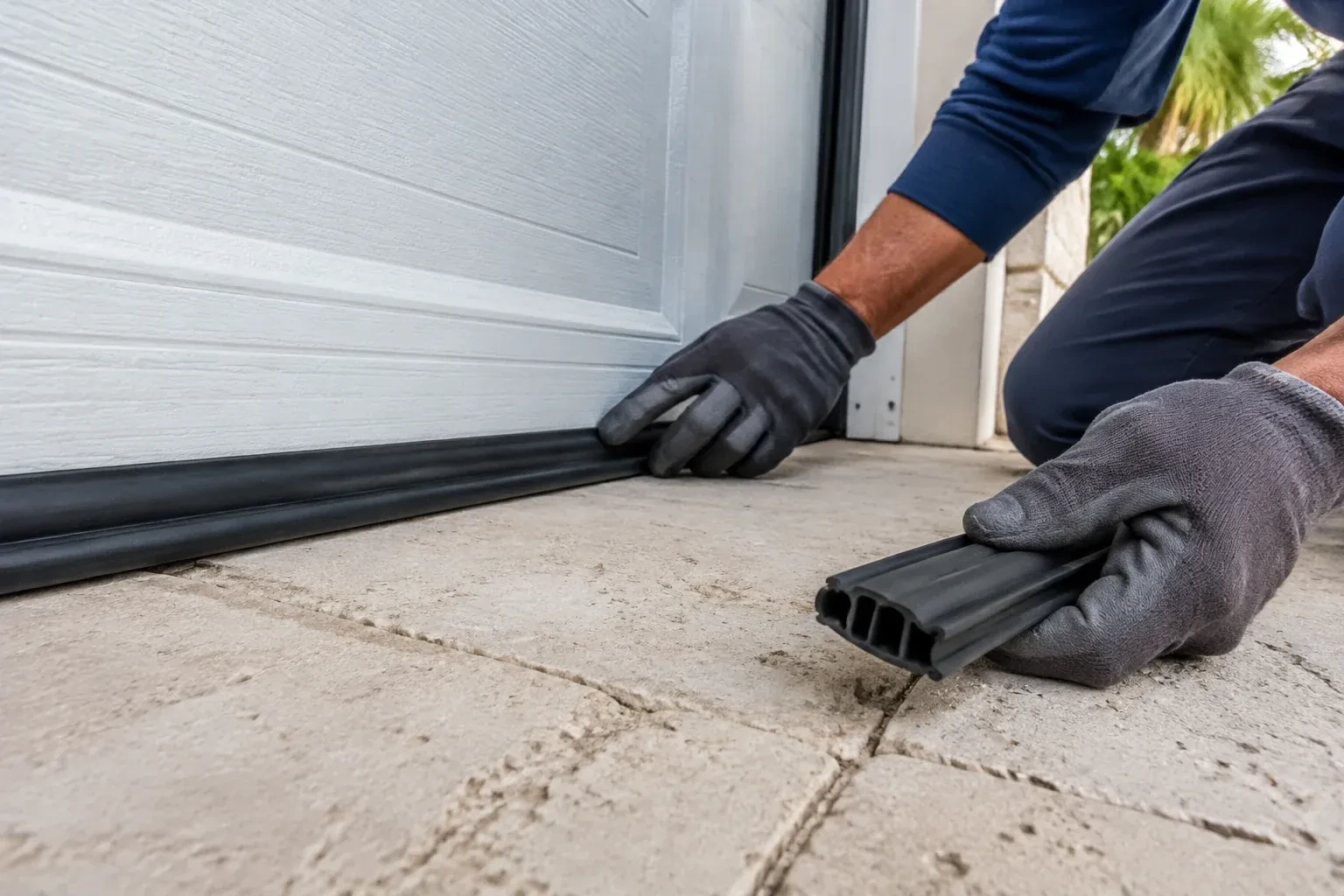
Garage Door Bottom Seal Replacement in Dunedin
After a spring rain there is a puddle inside the door that reaches the tires. The driveway slopes toward the garage, the slab has a low corner, and the flattened old seal is not making up the difference.
Garage Door Bottom Seal Replacement
In plain words
The material matters as much as the shape when the garage sees real winters. Vinyl is the common choice: it resists moisture and sun well but grows stiff in deep cold and stops moulding itself to the concrete. Rubber stays supple at low temperatures and follows an uneven floor, though it can harden after many years of sun. Silicone keeps its flexibility through hot and cold alike and resists cracking, at a higher cost per metre. Choosing the right compound for a door that faces the weather is part of the service, and it is one reason a replacement seal often outlasts the one it replaces.
How the visit goesThere are mouse droppings along the wall behind the recycling bins, and at one bottom corner of the door the vinyl has a neat chewed notch the width of a thumb. Something has found its way in for the winter.
Dunedin
How the visit goes
Reading the gap with the door closed
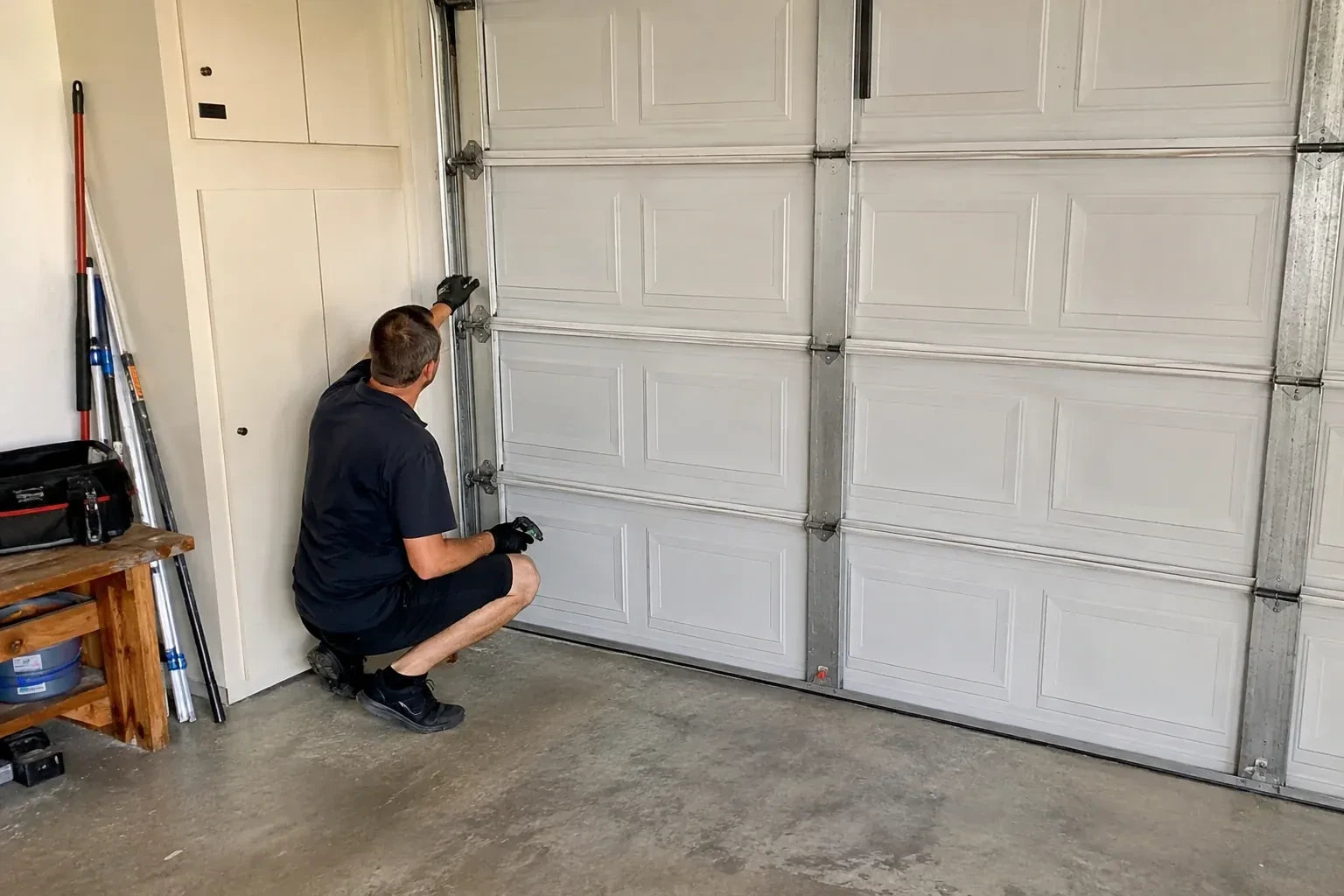
The assessment starts with the lights off and the door down. From inside, the technician looks along the floor line for daylight and notes where it shows: a thin line the full width, a wedge at one corner, or a patch in the middle. A straightedge laid across the threshold shows whether the slab is flat or dished, and a hand run along the seal feels where it touches and where it hovers. Photographs of the worst spots are taken so you can see what is being fixed. This map of the gap tells the technician how tall the new seal needs to be and whether anything other than the seal is contributing.
Taking the old seal out
With the door secured, the ends of the old strip are freed from any caps or folds and the seal is drawn out of its channels from one end. A supple seal slides; a hardened one is coaxed with a flat blade and a little silicone, or cut into short lengths and removed a piece at a time. Old nails come out of a wood rail with a claw. The channels are then cleaned of grit, rust flakes, salt crust and any remnants of the previous strip with a wire brush and a scraper, because a clean channel is what lets the new seal feed through without tearing.
What to look for each season
Once a season, close the door, turn off the lights and look along the floor. You are checking for a line of daylight, a corner where the seal hovers, an end that has slipped from its channel, and cracks along the fold of the bulb. Run a hand along the strip for stiff or brittle patches. Then watch the door close under power once and notice how it lands. A change in any of these is worth a call while the fix is a seal or an adjustment rather than a torn strip dragged through a winter. The check takes less time than reading this paragraph.
Garage Door Bottom Seal Replacement
In the van
- Wire brush and scraper
- Seal end caps
- Track clamps
- Threshold seal and adhesive
- T-style bottom seal
What affects the quote
Same fees day, night or weekend
1Perimeter seals done together
Jamb and header weatherstripping renewed in the same visit is quoted per length of stop moulding, and doing it alongside the bottom seal saves a second call-out.
2Access and clearance
Storage, a vehicle that must stay inside, or shelving against the bottom of the door slows the work. A clear metre inside the door makes the visit shorter.
3Number of doors
Two single doors are two seals, two inspections and two opener resets. The travel is shared, so doing both in one visit costs less than two separate calls.
Garage Door Bottom Seal Replacement: questions
Does a wood garage door use the same kind of seal?
Usually not. Wood doors most often carry a flat or angled strip of vinyl or rubber nailed directly to the bottom rail, rather than a profile that slides into a retainer. Replacement means removing the old strip and nails, checking the rail for soft or cupped wood, and fastening a new strip so its lip angles outward and meets the floor along the full width. A retainer can be added to a sound rail if you prefer a channel seal.
What is the difference between T-style, bead and bulb seals?
The names describe the edge that grips the retainer and the shape of the part that meets the floor. A T-style seal has T-shaped edges that slide into slotted channels along the bottom rail. A bead seal has round edges for the rounder channels found on many older steel doors. A bulb, or U-style, seal is a larger tube that compresses further and suits rough or dished floors. The retainer on your door decides which one fits.
What information helps when I book?
The width of the door and whether it is a single or double; what is getting in, whether light, drafts, water, snow or pests, and where along the door; whether the gap is even or worse at one end; the door material; and a photo of the end of the bottom section showing the retainer and seal. Mention if the seal has frozen to the floor or if the door has been reversing before it closes.
Repair & Maintenance
- Garage Door Tune-UpYou moved in a few months ago and have no idea when the garage door was last looked at.
- Off-Track Garage Door ResetThe door came down fine but with a scraping noise, and now the vertical track on one side is bowed…
- Garage Door Panel ReplacementA stray ball went through one of the window panes in the top section.
Garage Door Bottom Seal Replacement near you
Garage door work for Dunedin divides neatly into what we fix, what we replace and what we install. We fix tracks, hinges, openers and panels; we replace springs, cables, rollers, seals and sensors; and we install new doors, new openers and access equipment such as keypads and smart controllers.
- Wasaga Beach
- Clearview
- Midland
- Penetanguishene
- Creemore
- Stayner
- Brocks Beach
- New Wasaga Beach
- Oakview Beach
- Oxbow Park
- Firth's Corners
- Portage Park
- Sunnyside
- Glen Huron
- Singhampton
- Balm Beach
- Coutnac Beach
- Edmore Beach
- Georgian Heights
- Kettle's Beach
- Marygrove
- Ossossane Beach
- Perkinsfield
- Sawlog Bay
- Wahnekewaning Beach
- Woodland Beach